
Highlights
- Wayfinding in healthcare reduces stress by making it easier to locate departments, entrances, and check-in areas.
- Clear navigation improves the patient experience and helps healthcare facilities feel more welcoming, organized, and professional.
- Wayfinding helps staff spend less time giving directions and more time assisting patients.
- Consistent signage, directories, and naming conventions help visitors navigate healthcare environments with greater confidence.
- Hospitals, urgent care centers, senior living communities, nursing homes, laboratories, and dental offices can all benefit from a well-planned wayfinding strategy.
Effective wayfinding helps patients and visitors feel confident, comfortable, and supported throughout their visit.
1. Good wayfinding in healthcare helps reduce stress.
2. Easy navigation improves the overall patient experience.
3. Effective wayfinding in healthcare environments supports staff and operations.
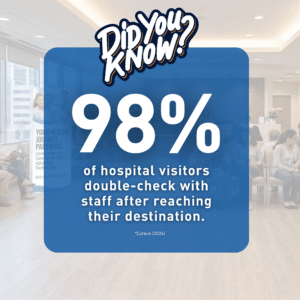
A 2025 study of U.S. hospital staff found that employees spent an average of about 30 minutes per week helping people navigate the facility. Individually, those interruptions may seem minor, but across a large healthcare environment, they can create recurring operational friction.
Effective wayfinding is more than adding signs. It is a coordinated system of information, terminology, visual cues, maps, directories, and signage designed around how people actually move through a space. When these elements work together, patients and visitors can navigate more independently, helping reduce unnecessary interruptions and allowing staff to stay focused on their primary responsibilities.
4. Every healthcare facility can benefit from better wayfinding.
"Wayfinding is really about helping people feel comfortable in an unfamiliar environment. When someone walks into a healthcare facility, they shouldn't have to spend the first few minutes figuring out where to go."
FAQs
Create better experiences through effective wayfinding.
About Gable